Start with the feeling of the gathering
An intimate wedding is a celebration shaped around a smaller group and more time together. There is no universal guest-count cutoff. A dinner for eighteen and a weekend for forty can both feel intimate if the spaces, schedule, and hosting choices suit the people attending.
Begin by describing the atmosphere you want in ordinary language. Perhaps you want to hear everyone around one table, share a favorite meal, or spend the afternoon outdoors without a tightly managed program. These descriptions offer better planning guidance than choosing a visual theme before you understand the experience.
A small wedding still needs practical coordination. Guests need clear directions, comfortable seating, enough food, and a way to get home. Reducing the guest list can make room for personal details, but it does not remove the work of hosting. Choose a few details you can deliver well instead of multiplying activities because the event seems manageable.
Build the guest list before the design
Choose a consistent approach to invitations with your partner. You might invite immediate family and close friends, or the people you see regularly in daily life. Discuss partners and children together, then apply your decisions with care. A clear boundary is easier to explain than a collection of exceptions.
You can say, “We are keeping the celebration very small, but we appreciate your good wishes.” You do not need to describe the budget or defend the closeness of every relationship. Avoid suggesting that an uninvited person may receive a late invitation unless that is a promise you intend to keep.
Think about the group dynamic too. A guest who knows nobody besides you may appreciate an introduction before the wedding. Seating can help connect people through shared interests without requiring them to participate in structured games. Personal hosting often starts with these quiet social considerations.
Pick a space that fits the people
A private restaurant room, a small garden venue, or a modest historic property may offer a more comfortable scale than a large ballroom. Ask how the room looks and sounds at your actual guest count. Empty space can feel lovely when intentionally arranged, but awkward when all the furniture sits against distant walls.
For a home celebration, check what the house does not provide automatically. Consider restrooms, parking permissions, electrical needs, food preparation, weather cover, rental access, and cleanup. Ask appropriate local authorities and suppliers about requirements. A home venue can be meaningful while still needing substantial hired infrastructure.
Visit the weather alternative before committing. Ask whether the same number of guests can sit, eat, and move comfortably indoors. A plan that protects the ceremony but leaves the dinner exposed is incomplete. Also ask about stairs, surfaces, lighting, and the route between each part of the event.
Spend on the experience you value
A smaller guest list may reduce some variable costs, such as individual meals, but many costs remain fixed. Photography, venue hire, transport minimums, and entertainment do not necessarily shrink with attendance. Compare complete quotations rather than assuming a small wedding will be inexpensive.
Use your priorities to guide a few deliberate upgrades. A couple who loves food might choose a longer tasting menu. Another might prioritize comfortable guest transport or a musician during dinner. The upgrade should improve your actual gathering, rather than imitate a bigger wedding on a smaller scale.
Keep a written distinction between essentials and preferences. Enough seating is essential; matching antique chairs are a preference. Dietary accommodation is essential; elaborate menu calligraphy is a preference. This distinction makes it easier to reduce spending without diminishing hospitality.
Five ideas that create connection
Share one welcoming table
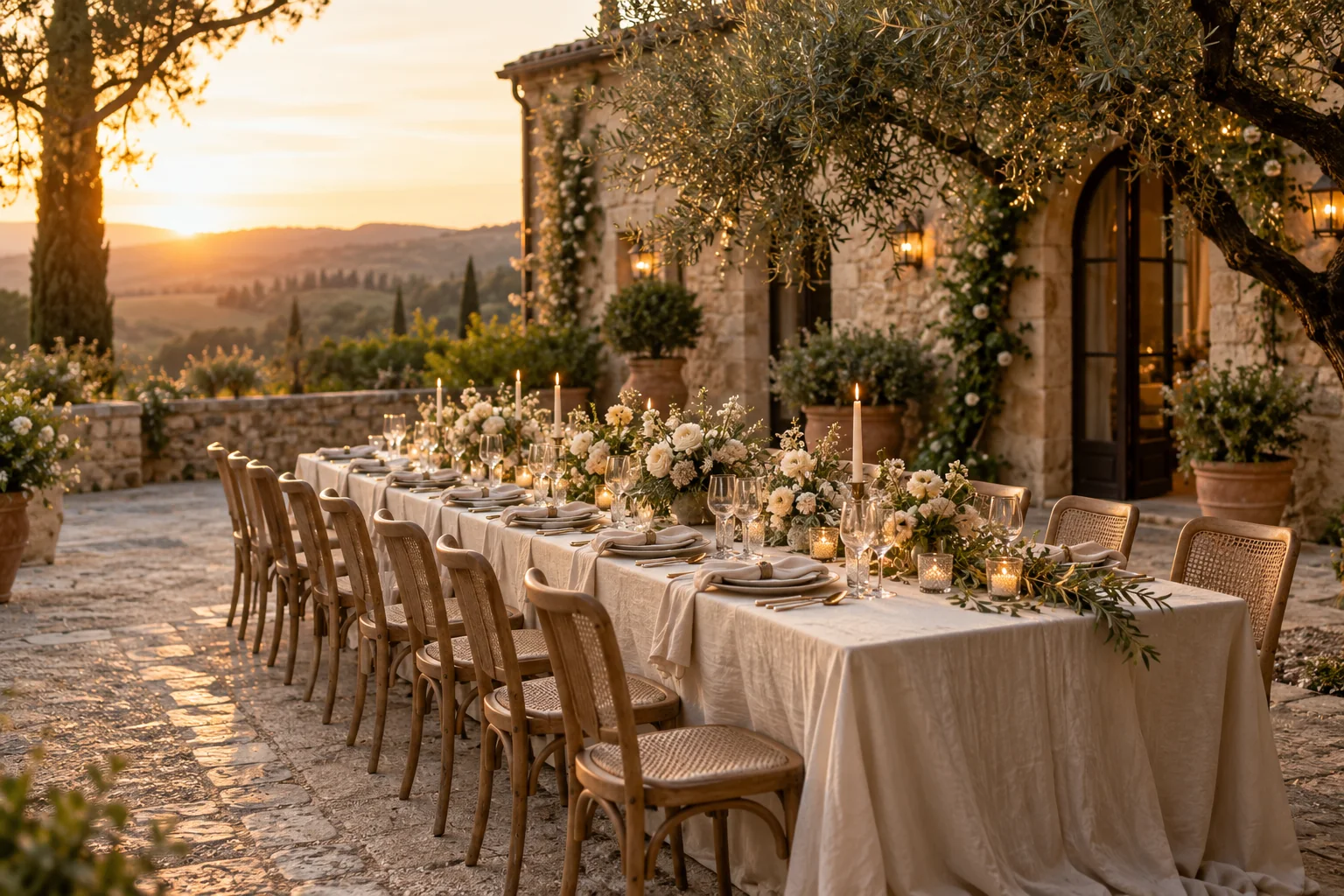
A long table can support conversation and a sense of shared occasion. Check its width before choosing flowers and serving dishes. Guests should be able to see each other, hear reasonably well, and put down a glass without moving the centerpiece. Ask your caterer how the arrangement affects service.
Write a short personal note
Leave a few sincere sentences at each place setting. Mention why you are glad that person is there, rather than trying to write a miniature speech. You can divide the list with your partner and write over several evenings. If this becomes burdensome, one shared welcome letter can be equally warm.
Offer an unhurried meal
Give dinner enough time to feel like dinner. Discuss the service pace with the caterer and avoid inserting a speech between every course. Leave room for guests to speak to each other. A relaxed meal depends on a clear behind-the-scenes plan, even when it appears effortless.
Make one shared activity optional
A gentle garden walk, a family photograph display, or a small selection of favorite songs can give people something to enjoy together. Provide a comfortable alternative for guests who prefer to sit. Connection is easier when participation is an invitation rather than a performance.
Keep the ceremony personal
Choose a reading, a piece of music, or a short explanation of a meaningful tradition. Ask contributors well in advance and give them a clear role. A personal ceremony does not need to disclose private stories; it needs to reflect what you are comfortable sharing.
A simple reception comparison
| Choice | What it offers | What to check |
|---|---|---|
| Long-table dinner | Shared atmosphere and a clear focal point | Conversation distance, accessible seating, serving space |
| Restaurant private room | Existing kitchen, furniture, and staff | Minimum spend, exclusive use, closing time |
| Home garden meal | Personal setting and flexible styling | Weather, restrooms, permissions, cleanup |
Treat these as starting points for questions, rather than a ranking. The best option is the one that supports your guest needs within your spending limit. If a venue includes staff and furniture, compare that total against the full cost of bringing services to a private property.
Give the day a gentle structure
You can simplify the program without leaving guests uncertain. Tell people when to arrive, where to gather, when food will be served, and how late you expect to celebrate. If there is a long interval between ceremony and dinner, explain what is available during that time.
Protect some time for yourselves. A short walk after the ceremony, a private bite to eat, or ten minutes before guests enter the dining room can help the day feel lived rather than managed. Discuss this with the photographer so the pause does not become another demanding portrait session.
End with a clear farewell and practical transport information. A small celebration is still a significant invitation of people's time and care. Thoughtful hosting is what makes the scale feel generous: guests know where they belong, you have time to greet them, and the day leaves room for ordinary conversation.